

Patchouli Patch by L'Artisan Parfumeur
Men Women 2002


Main accords
Description
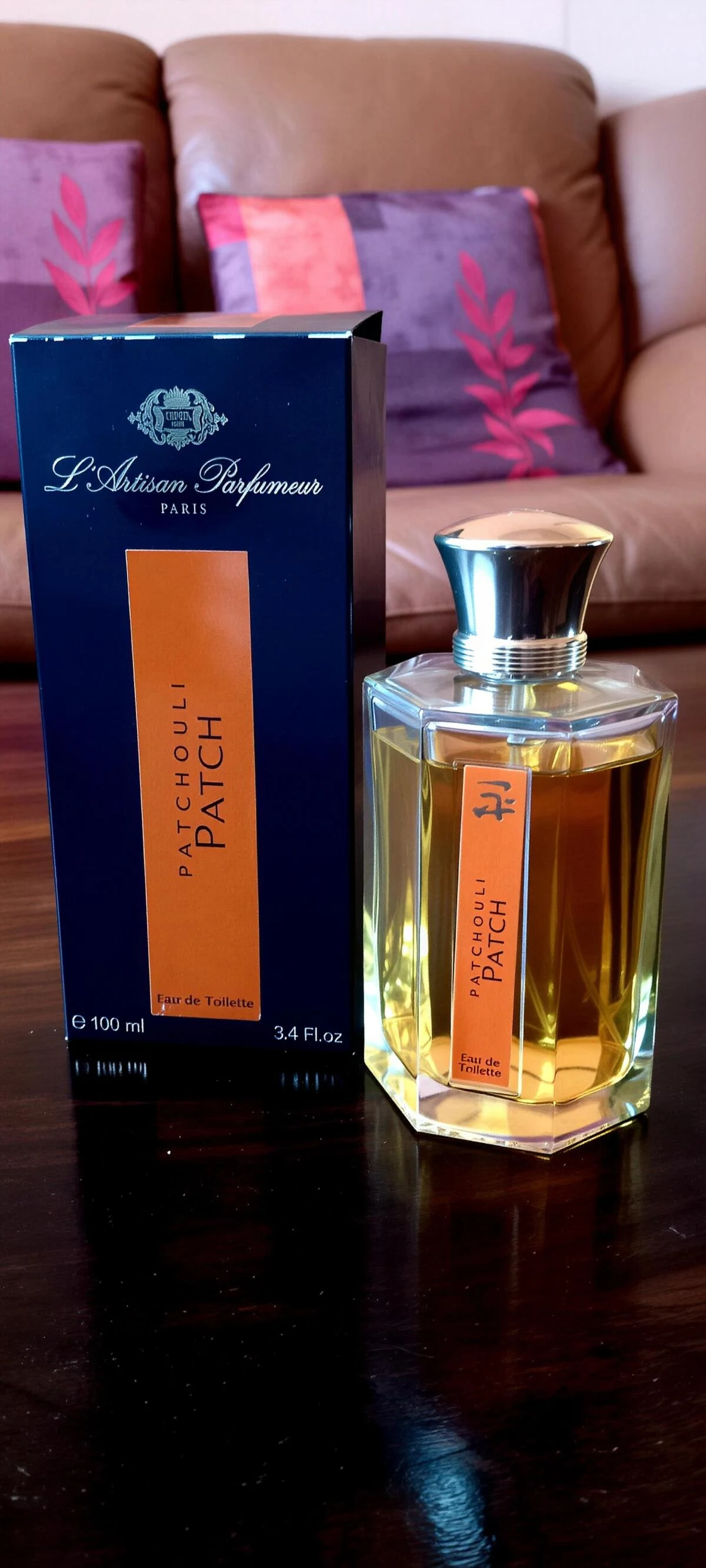
Patchouli Patch by L'Artisan Parfumeur is an oriental fragrance for men and women launched in 2002. Created by Evelyne Boulanger and Bertrand Duchaufour, this composition features top notes of patchouli, caraway, star anise and white musk. The heart unfolds with patchouli, white musk, osmanthus and iris, while the base settles on sandalwood, vetiver and cedar.
Show moreQuick summary
When to wear it (votes)
Key notes
-
Top
 patchouli
-
Heart
patchouli
-
Base
 sandalwood
Community
612 votes
- Positive 79%
- Negative 18%
- Neutral 3.4%
The olfactory pyramid
A guide to the opening, heart and lasting trail of the fragrance.


The community speaks
Compare the results and tap an answer to add your vote.
In the collection
Leading answer I own it
1,401 votes
What do you think?
Leading answer Like it
612 votes
Season
Choose severalLeading answer Autumn
395 votes
Time of day
Choose severalLeading answer Day
231 votes
Each question has its own vote count. You can choose several seasons.
Fragrance profile
About Patchouli Patch
Patchouli Patch by L’Artisan Parfumeur is an oriental fragrance for men and women launched in 2002. Created by Evelyne Boulanger and Bertrand Duchaufour, this composition features top notes of patchouli, caraway, star anise and white musk. The heart unfolds with patchouli, white musk, osmanthus and iris, while the base settles on sandalwood, vetiver and cedar.
Woods and mosses Spices Flowers
It may remind you of
Ranked by what the community voted.


More from L'Artisan Parfumeur


More from Bertrand Duchaufour


How it wears
Compare the results and tap an answer to add your vote.
Longevity
Leading answer Moderate
169 votes
Sillage
Leading answer Moderate
209 votes
Character
Leading answer Balanced
61 votes
Value perception
Leading answer Fair price
45 votes
You may also like



Community reviews
4 reviews
Share what you noticed: opening, drydown, sillage and the moments when it works for you.
I bought this for Christmas because it’s a patchouli where the fruity notes shine without being cheesy. At first, it smells of plum or brandy; with that just-right touch of iris, it reminds you of the skin of a plum. The moisture of the alcohol and the ethylene note of the patchouli evoke fermentation, like that hormone felt in ripe fruit. It’s not sweet like sugar, but mixes that fermentation with the soapy facet of patchouli, which brings to mind a steamy bath of a bygone era. Although that image is secondary, the fragrance maintains a certain dryness. It’s vintage, but not entirely boxed in; dark without being wild, heavy yet soft. In short, the balance is excellent.
I bought this for Christmas because it’s a patchouli where the fruity notes shine without being cheesy. At first, it smells of plum or brandy, with just the right touch of iris that reminds you of the fruit’s skin. The alcoholic moisture and the ethylene of the patchouli evoke fermentation—no sugary sweetness, but rather that soapy facet of an old-fashioned bath, though with a certain dryness. It’s vintage but not entirely; dark without being wild, heavy yet soft. The balance is excellent.
Well done on this Patchouli Patch. At first, like with many L’Artisan scents, it makes it clear it’s not a loud advertisement perfume, and I believe the current version has been reformulated and diluted; you’d need to hunt for old bottles and avoid the bandits of Sierra Morena. But I really liked it. I don’t intend to wear it myself, but it has great quality and composition. Of the patchoulis I’ve tried lately, this is the one that comes closest to my beloved Gentleman: clay-like and earthy. Most smell of burnt grass or acidic onion, which I can’t stand for wearing, only for smelling on others. I’m looking for that cold, earthy, clay-tasting feel of Gentleman, Aromatics Elixir, or Cabochard. The first time I smelled it, a tear sprang to my eye; it was impossible not to remember my Givenchy. Then it takes its own path without losing that memory of Paul Leger. The patchouli carries a subtle aniseed tone, not overpowering, but with its aura of spiciness. It’s very woody with tender floral or fruity notes: not pulp or jelly, but the velvety skin of apricot or peach, nothing of that pungent olive. The blend of cedar, sandalwood, and osmanthus is wonderful, with fresh, spicy caraway. The olive mixes with the woods, giving a sensation of soft suede or an old grandfather’s silk handkerchief. Earthy and well-behaved patchouli dominates, zero hippie, zero Woodstock; it makes you think of nature and a civilised garden. The only drawback is that the aniseed is very noticeable. I’ve tried many patchoulis and almost all are the same: either the hippie style, the severe cold, or the sweet fruity clones. This one amused me because, although you’ve heard it before, it makes you think it’s pleasant and easy to wear. It’s very familiar, making me think of a cultured, nice person reading on the sofa. Very European. The quality of the notes is spot-on, natural and well-orchestrated, without plastic chords. PS: I’ve read Luca Turin, who gives it four out of five. He says it opens with piercing-style patchouli, but turns ninety degrees towards a seductive helichrysum note with fennel nuances, and then in the dry-down has a magnificent woody accord that disperses the toasted notes like a night breeze. A beautiful fragrance.
Hey, this Patchouli Patch is very good. At first, as happens with L’Artisan, it’s not the loud perfume advertised, and I believe the current version has been reformulated and diluted; if you’re interested, look for old bottles and prepare to dodge the bandits of Sierra Morena. But I really liked it. I don’t intend to wear it myself, but it has great quality and composition. Of the patchoulis I’ve tried, this is the one that comes closest to my beloved Gentleman: clay-like and earthy. Most, especially in lesser-known lines, smell of burnt grass, with hints of acidic onion or oak moss, and the truth is, I can’t stand it. I like it for smelling on others, but not for myself. The patchouli I’m looking for is that of Gentleman, Aromatics Elixir, or Cabochard: cold, earthy, and with a clay aftertaste. The first time I smelled it, a tear sprang to my eye; it was impossible not to remember Givenchy. Then it takes its own path without losing that memory of Paul Leger. The aniseed note isn’t literal, but its aura of spiciness, and above all it’s very woody with tender floral or fruity tones—not the pulp or flesh, nor sweetness, but the velvety skin of apricot or peach, nothing of that pungent olive. The blend of patchouli, cedar, sandalwood, and osmanthus is wonderful, along with fresh, spicy caraway. The olive mixes with the woods and sometimes smells of soft suede or an old grandfather’s silk handkerchief. Earthy and well-behaved patchouli dominates, zero hippie, zero Woodstock, zero gothic; it evokes nature, open spaces, and a civilised garden, with the sparkle of osmanthus making it pleasant. My gripe is that the aniseed is excessive; although not strong, it’s very noticeable. I’ve tried many patchoulis and almost none surprise: either the full-on hippie, the cold of the classics, or the sweet fruity clones of Coco Mademoiselle. This one amused me because, being somewhat known, it makes you think it’s pleasant and easy to wear. It’s very familiar, making me think of a cultured, nice person reading on the sofa. A very European patchouli. PS: The quality of the notes is spot-on, natural and well-orchestrated, without plastic chords. I’ve tasted an old formula, as the current ones say they’re as common as bread and water. Update: after trying it, I think it’s of excellent quality, something rare in artificial fragrances. I looked up Luca Turin’s guide and the review is four out of five. Turin may or may not like it, but he reviews vintage perfumes with passion and hates the rubbish. He says: ‘This wonderful and deceptive fragrance opens with piercing-style patchouli, but when trying to say ‘idiot’, it turns ninety degrees towards a seductive helichrysum note, a rare flower with fennel nuances, as hard to interpret as a giraffe under the sheets. It already appeared in Sables by Annick Goutal and Eau Noire by Dior, but it’s pleasant to see it again. Then, in the dry-down, with reminiscences of Timbuktu, it has a woody accord that disperses the toasted notes like a night breeze. A beautiful perfume of which some prefer the third movement by itself.’