


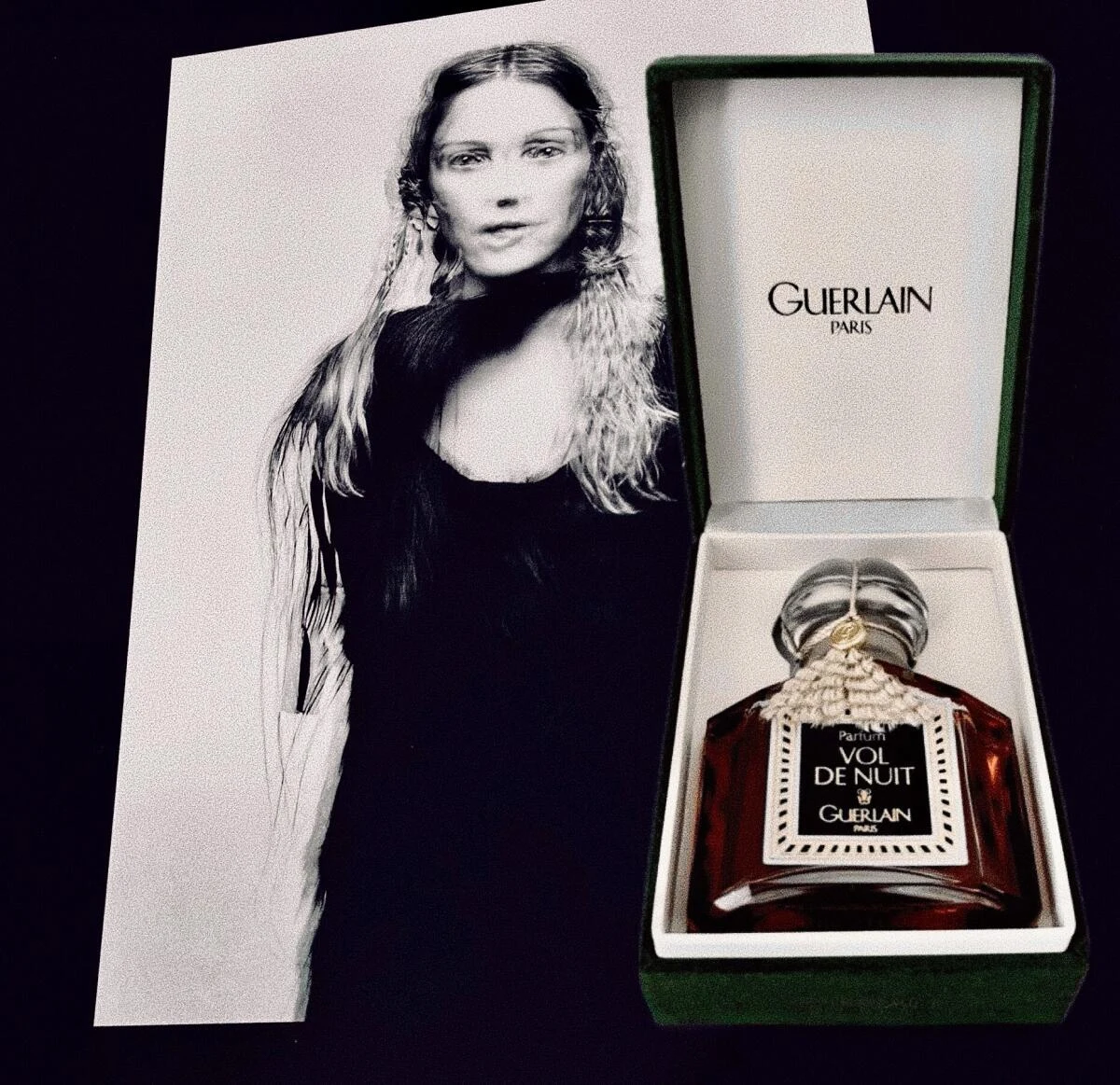
Vol de Nuit Extract by Guerlain
Women 1933


Notes


The community speaks
Compare the results and tap an answer to add your vote.
In the collection
Leading answer I own it
1,160 votes
What do you think?
Leading answer Love it
377 votes
Season
Choose severalLeading answer Autumn
234 votes
Time of day
Choose severalLeading answer Night
132 votes
Each question has its own vote count. You can choose several seasons.
Fragrance profile
About Vol de Nuit Extract
Vol de Nuit Extract by Guerlain is a floral fragrance for women. Launched in 1933, the nose behind this composition is Jacques Guerlain.
Green, herbal and fougère Flowers White flowers
It may remind you of
Ranked by what the community voted.


More from Guerlain


Related editions

More from Jacques Guerlain


How it wears
Compare the results and tap an answer to add your vote.
Longevity
Leading answer Long-lasting
121 votes
Sillage
Tied for the lead Moderate / Strong
144 votes
Character
Leading answer Balanced
75 votes
Value perception
Leading answer Fair price
64 votes




Have you worn Vol de Nuit Extract?
Tell us how it opens, how it settles on your skin, how long it lasts and when you wear it.
Scentifolia
A perfume with an indecisive name, straddling the blurry line between chypre and oriental; glamorous yet quiet, complex and elusive, with much to say but preferring silence. It opens green and earthy, revealing a floral heart of narcissus and dusty, powdery lilies, like stems freshly pulled from the soil, dripping with earth and moss. Over time, it orients itself towards something reminiscent of Shalimar, with more woods and narcissus trapped within amber and orris webs—that cold, taciturn personality that reminds me of the Anglo-Saxon aristocrat from Downtown Abbey, sipping champagne and playing cricket in the Claridges foyer, yet whose real life unfolds in the countryside in worn clothes and scuffed Wellington boots, walking dogs, brushing horse manes, browsing auction magazines, and deciding which spider silks to keep. It carries a bitter, oily accord with aged woods, a scent that evokes Tintin and Wooster and Jeeves books, the adventurous and exotic fetish of the 1930s, breaking records in sky and land, old engines, patent-leather shoe cream, earth and crinoline, damp mansions for termites and moths, immense libraries with woodworm-ridden corners, leather-bound covers dusted with age, and outside, yellow narcissus lining arched windows. It smells deliberately undefined, a personality that marks you by its absence, meeting a gaze that always slips away, and the irony of the golden age of flight seeking new horizons where none exist. A beauty.